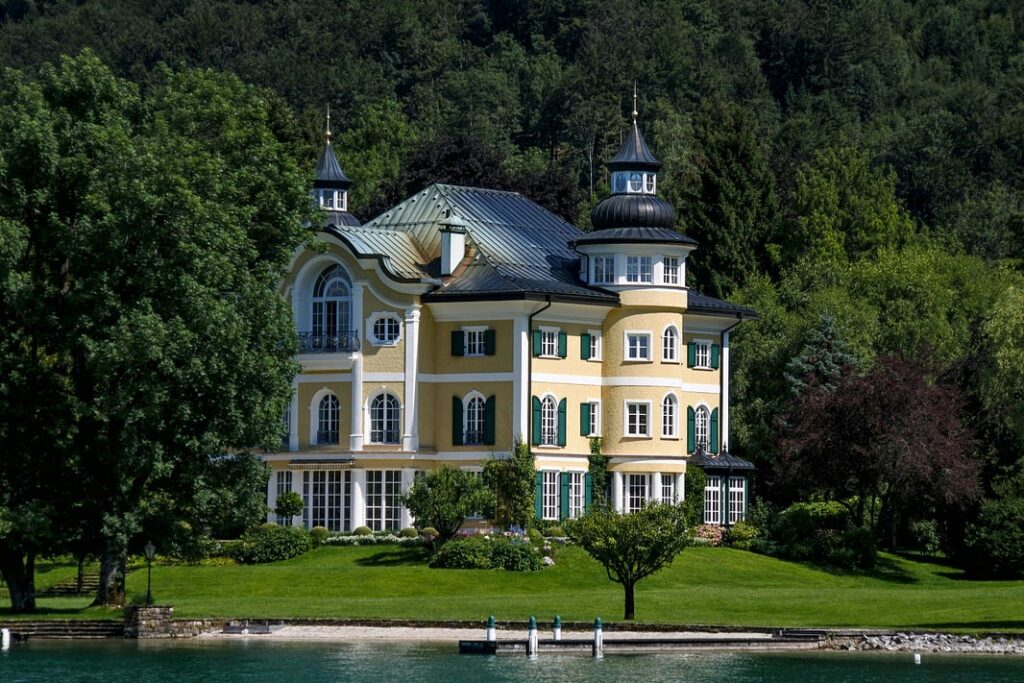
An armchair venture in weak analysis and heavy speculation
Most of the people I know, including family members and friends and just people I pass in the street or see at our local parades, are not rich people. Me either. So me here trying to tell you what rich people are good at is going to fall a little flat. I’m not an expert.
Most of my acquaintance with rich people comes from the supermarket tabloids and celebrity news, the gossipy bits about their fabulous parties, their glitz and glamor, their excess. I used to like reading Robin Givhan when she was the fashion reporter for the Washington Post. I don’t know whether Ms. Givhan herself is part of the rich set she reports on, but her eye is sharp and even if she doesn’t actually travel with this crowd on her own dime, she sure as hell describes them believably. So I use her and others like her as reliable sources of information.
So here’s what I think I know about rich people and what they do well. First and most important they know how to spend money. That’s understandable enough. If they’ve got so much of it, wouldn’t it just collect dust if you didn’t push it back into the economy? That doesn’t mean, by the way, that they spend it well. But however they spend it, it’s supporting the economy — some economy, though not necessarily a local economy, like here in small town West Virginia where I live. Too often it supports the luxury economy of places that already have a lot — economies that cater to those like them.
Second, they really know how to accumulate more money. It seems to be an outgrowth of the competitive nature that got them where they are. (I exclude the large percentage of the rich who had the luck to be born to money and whose contributions to society revolve around justifying their birth advantage.) The actually productive rich embrace the accumulation of more money as giving their lives meaning. If I made one fortune, I have a social obligation to make others. To hear them tell it, successfully launching a new venture is prima facie evidence of their human worthiness. If some proportion of their entrepreneurial success is attributable to having had the right parents and knowing the right kingmakers and being there at the right time, those factors take second seat to their talent. If that sounds maybe a little dicey, they have PR people who can twist and spin the facts to make it seem not so.
Third, they can be boosters with others like themselves who travel in the same class. They can persuade people like them to do good too. They can marshal money and spike efforts in support of their favorite causes. Some of these influencer rich are major benefactors, keeping cultural and social programs going in their communities and doing good in far-flung places around the world. They turn themselves into fundraising engines, especially for their favorite causes. Like the old Jerry Lewis telethons that over their almost 50 year run raised a couple of billion dollars for Muscular Dystrophy. Or the Bill and Melinda Gates Foundation, financed by Microsoft money, which is doing battle in the centuries’ long fight against the Anopheles mosquito and malaria. Good stuff.
But there is a downside of so much money in the pockets of the super rich. Most importantly, they tend to be possessive of what they have and show a decided preference for not broadly sharing it. They can be stingy and moralistic about who they give their money to. It’s much more likely, for example, that their money goes to support the local symphony than the local women’s shelter. This isn’t a complaint, really, since highbrow culture is important, but then so too are battered women important.
The rich though would relegate the women with bruises to the care of government funded social service agencies. They’re not a priority for them. And since the rich are pretty adept at avoiding spending their “hard earned” money on the taxes needed to fund these agencies, the agencies survive by getting good at grant getting. But when the government itself turns against them, as it typically does in Republican administrations, then their very survival becomes a problem. Would the rich step up in this event? Good question. We’re about to find out.
Then there’s the fine print on rich people’s giving. Too often they expect a return on their “investment,” meaning that their donations can be underlain with ulterior, self-serving motives. It’s like they pass every donation through their PR and Legal departments to make sure 1) it enhances their brand, 2) it doesn’t incur any liabilities, and 3) it buys them bragging rights or lobbying leverage. It’s the old adage at work: you always look out for Number One first.
Another downside of entrusting too much of our total money to the rich is that it changes the nature of who we are as the American people. In the periods of our history when the distribution of wealth was so skewed, the lives of the rich and the poor differed dramatically. The rich were fed by servants, lived pampered lives, worked in suits, and suffered from gout. The poor cooked for themselves, scraped by, worked in overalls, and suffered from TB.
The stratification of those times led to massive abuses by the privileged. For instance, the rich felt content to wall themselves off from the the poor and, worse, to feel that the poor largely deserved their poverty. The country tried to remedy the disparity and did so to some extent by creating a thriving middle class. We didn’t eliminate the rich, but we gave them something of a social conscience. In a way we made them less greedy and more caring. But likely because we didn’t go far enough to eliminate poverty entirely, the same forces that led to the extreme economic polarization of the population decades before reasserted themselves and we’ve now, in 2025, returned to class warfare. The rich don’t trust us and we don’t trust them.
The rich are back to being greedy again and believing that they know what’s best for the non-rich. They’re pushing for a diminished role of government in all areas, except national security and defense, telling people they have to take care of themselves. They’re putting huge holes in the social safety net, flattening the middle class, and bulging out the numbers of the poor. All the “tools” the country set up to create a thriving middle class for all citizens are rusting out — affordable housing, affordable education, affordable food, affordable transportation, affordable health care. When you total up the impact of all those unaffordable necessities of living, you create poor people, a lot of them. Welcome back to the Gilded Age and the robber barons.
And then there’s this spirit of competition that drives the rich. Here I’m on really speculative ground. The number of billionaires in my social circle is zilch. I’ve never even met one, let alone gotten an invitation to the Met Gala or to Jeff Bezos’s wedding. Not that I’m complaining. But making assumptions about their motives, it’s easy enough to believe that the top 0.001 percent are competing with one another to see who becomes the first trillionaire.
The most likely candidate so far, Elon Musk, was probably closest to getting there before he pissed off Trump. Their dust up likely screwed the pooch for him. Trump makes little attempt to hide that he really, really, really wants the distinction of being our first trillionaire. He would value it more than the Nobel Peace Prize. Musk may have to be content to be the first man on Mars. And for that I wish him well. But Trump probably doesn’t have the time it would take to reach his own version of Mars. And he gets no points for trying to put golf courses in every third-world country.
So I’m done. My apologies for not providing the statistical data I could have pinned onto this donkey’s tail (or is it tale?). It’s kind of depressing to do the fact checking, not to mention that readers’ eye gloss over with too much detail. So this account is light on facts and heavy on personal opinion. I make no apologies, relying on the First Amendment, while we still have it, to call it like I see it.